

Introduction: The Strategic Maritime Lifeline of the Malacca Strait
India to Singapore Ocean Freight supports important trade flows between Indian exporters, Singapore transshipment hubs, and Malaysian ports.
The maritime corridor connecting the Indian subcontinent to Southeast Asia—specifically Singapore and Malaysia—is an important maritime trade corridor connecting India with Southeast Asia. Straddling the Strait of Malacca, through which a significant share of global traded goods pass annually, this trade corridor connects Indian manufacturing and agricultural hubs with ASEAN distribution centers and transshipment gateways.
India to Singapore Ocean Freight connects Indian exporters with Singapore’s global transshipment network and Malaysia’s major industrial ports.
Key export commodities from India include organic chemicals, aluminum ingots, steel coils, machinery parts, frozen seafood, and agricultural produce. In return, Singapore and Malaysia export electronics, palm oil derivatives, polymers, industrial automation equipment, and rubber products into Indian industrial corridors.
For international shippers, achieving predictable supply chain velocity across this corridor requires selecting the right port pair, balancing direct feeder services against hub transshipment, and partnering with the right shipping service provider.
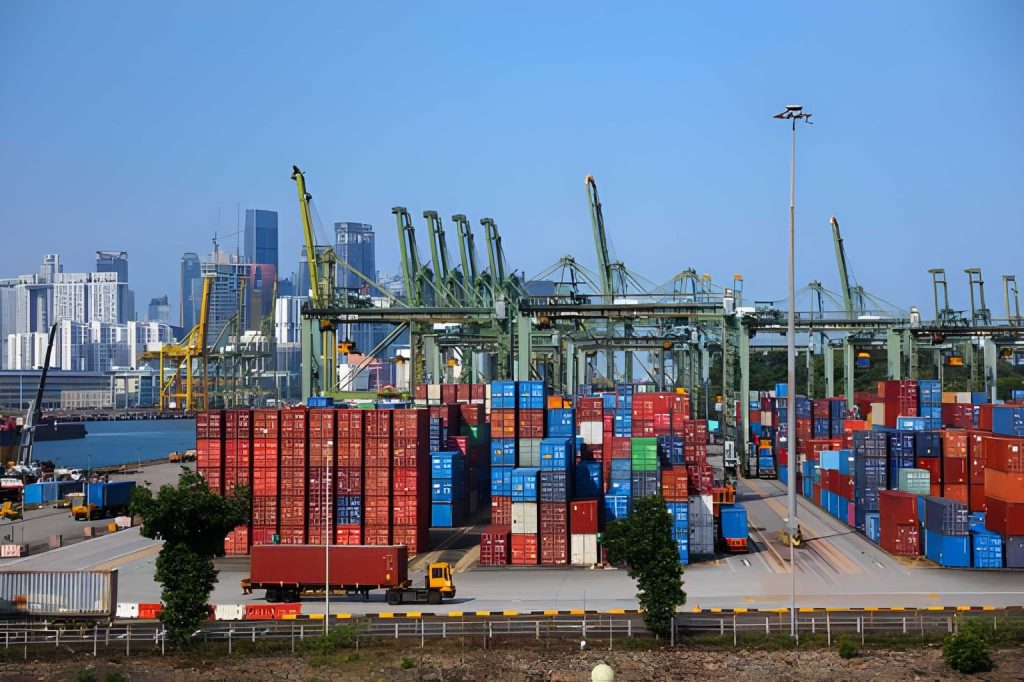
Alt text: India to Singapore Ocean Freight through Singapore and Port Klang
Caption: Ocean freight routes from India to Singapore, Port Klang and Pasir Gudang.
Core Maritime Gateways: Singapore, Port Klang & Pasir Gudang
Port of Singapore (PSA)
Singapore is one of the world’s major container transshipment hubs. Singapore connects Indian shippers to an extensive global network of ports and trade lanes. While Singapore serves substantial domestic consumption, its primary value lies in rapid transshipment connections to East Asia, Australia, and the Pacific Rim.
Port Klang, Malaysia (Northport & Westport)
Located approximately 40 km southwest of Kuala Lumpur, Port Klang is Malaysia’s primary national seaport. It offers direct highway and rail connections to the Klang Valley industrial basin, making it an important entry point for heavy industrial imports into Peninsula Malaysia.
Port of Pasir Gudang
Situated at the southern tip of Peninsula Malaysia directly opposite Singapore, Pasir Gudang serves the booming manufacturing, petrochemical, and automotive corridor of southern Malaysia.
NVOCC Box Operations vs. Mainline Carriers on the SE Asia Corridor
When booking ocean freight between India, Singapore, and Malaysia, shippers often debate booking directly with Mainline Ocean Carriers (MLOs) versus Non-Vessel Operating Common Carriers (NVOCCs).
Flexibility & Detention Free Time
MLOs enforce rigid demurrage and detention windows. NVOCCs like Navio Shipping may offer commercially negotiated free-time options, subject to trade and contract.
Space Guarantees During Peak Seasons
Mainline carriers prioritize long-haul transpacific or Europe strings, frequently rolling regional Asian containers. NVOCCs manage dedicated regional slot charters, which can improve booking stability during peak trade cycles.
End-to-End Multimodal Control
With direct offices in Singapore (Navio Shipping Pte. Ltd.), Malaysia (Navio Shipping (M) SDN BHD), and India (Mumbai HQ), Navio coordinates documentation, customs clearance, and inland trucking seamlessly under one roof.
For coordinated NVOCC shipping and international freight forwarding, shippers can evaluate the most suitable routing and equipment options for their cargo.
Customs Documentation & Free Trade Agreements (AIFTA)
Under the ASEAN-India Free Trade Agreement (AIFTA), Indian exporters and Southeast Asian importers may qualify for preferential tariff treatment, subject to applicable rules of origin and other requirements. To claim preferential duty rates, shipments must be accompanied by an authentic AIFTA Certificate of Origin (commonly Form AI) issued by authorized export agencies in India.
Exporters should confirm current certificate and documentation requirements with the relevant Directorate General of Foreign Trade authorities before shipping.
Frequently Asked Questions
How long does sea freight take from Chennai to Singapore?
Some direct services can take around 5 days, while transit varies by carrier and sailing, making it one of the fastest international ocean corridors from India.
Can Navio handle transshipment cargo via Port Klang?
Yes. Navio Shipping provides multimodal forwarding and transshipment handling via its Port Klang hub.
Which Malaysian port should I choose for cargo going to Kuala Lumpur?
Port Klang (Westport or Northport) is a major gateway for cargo destined for Kuala Lumpur and the Klang Valley.
Commercial Call-to-Action
Optimize your Southeast Asian supply chain with Navio Shipping’s container fleet and regional offices in Singapore, Malaysia, and India. Contact our ocean freight desk at Navio Shipping for instant freight quotes.
