

Introduction: Overcoming the Limitations of Standard Dry Containers
Flat Rack vs Open Top Container selection is essential when planning oversized or out-of-gauge cargo shipments.
Standard ISO dry containers (20ft and 40ft standard or high cube boxes) handle the large majority of global maritime freight. However, when project logistics cargo exceeds standard interior dimensions—such as heavy mining machinery, industrial turbines, transformers, construction excavators, steel pipes, or yachts—it is classified as Out of Gauge (OOG) cargo.
OOG cargo cannot fit through standard container end-doors or exceeds standard height or width limits. To transport these oversized shipments safely on container vessels without chartering expensive breakbulk vessels, ocean carriers and container operators utilize two specialized equipment types: Flat Rack (FR) and Open Top (OT) containers.
Choosing the wrong equipment type can lead to rejected vessel bookings, cargo damage, and thousands of dollars in lost slot surcharges. This guide provides an in-depth comparison of Flat Rack vs Open Top containers, exploring technical dimensions, crane loading methods, lashing standards, and cost dynamics.
Understanding Open Top (OT) Containers: Top-Loading Flexibility
An Open Top container is fundamentally similar to a standard dry van, featuring corrugated steel side walls and wooden flooring, but with one critical distinction: it has no solid steel roof. Instead, the roof consists of removable steel roof bows and a heavy-duty, weatherproof tarpaulin secured by a steel cable. The Flat Rack vs Open Top Container decision should also consider crane access, loading methods, and route restrictions.
• Overhead Crane Loading: The removable roof and swinging/removable top door header allow heavy or tall cargo to be hoisted directly into the container using overhead bridge cranes or gantry cranes, eliminating forklift maneuvering inside tight container doors.
• In-Gauge vs. Out-of-Gauge OT: When cargo is within the container’s height (approx. 2.35m in standard or 2.65m in high cube), the tarpaulin is fastened over the bows, traveling as In-Gauge Open Top. If cargo extends above the container frame, it travels as Over-Height OOG Open Top, remaining exposed under weather protection coverings.
• Best Suited Cargo: Long steel bars, industrial boilers, heavy glass sheets, machinery parts that can only be lifted vertically by crane but do not exceed container width.
Understanding Flat Rack (FR) Containers: Extreme Dimensional Freedom
A Flat Rack container consists solely of an ultra-reinforced steel floor bed and fixed or collapsible vertical end walls (bulkheads). It has no side walls, no side posts, and no roof. Flat Rack vs Open Top Container planning depends on cargo dimensions, height, width, weight, and securing requirements.
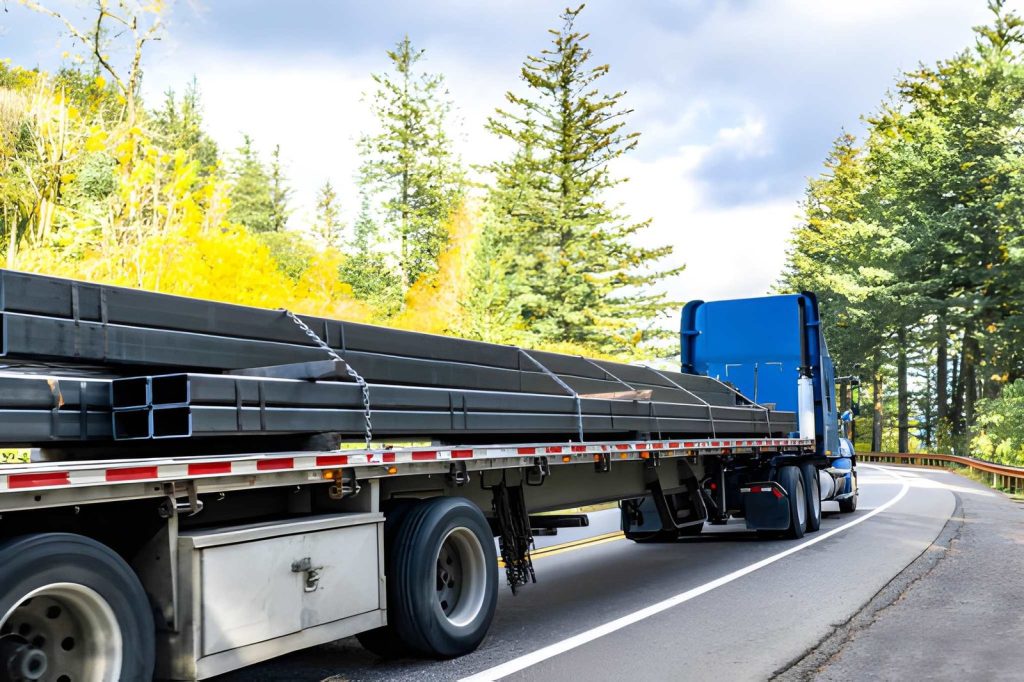
• Side and Top Loading: With completely open sides, cargo can be loaded from above by crane or from either side using heavy-duty forklifts, reach stackers, or straddle carriers.
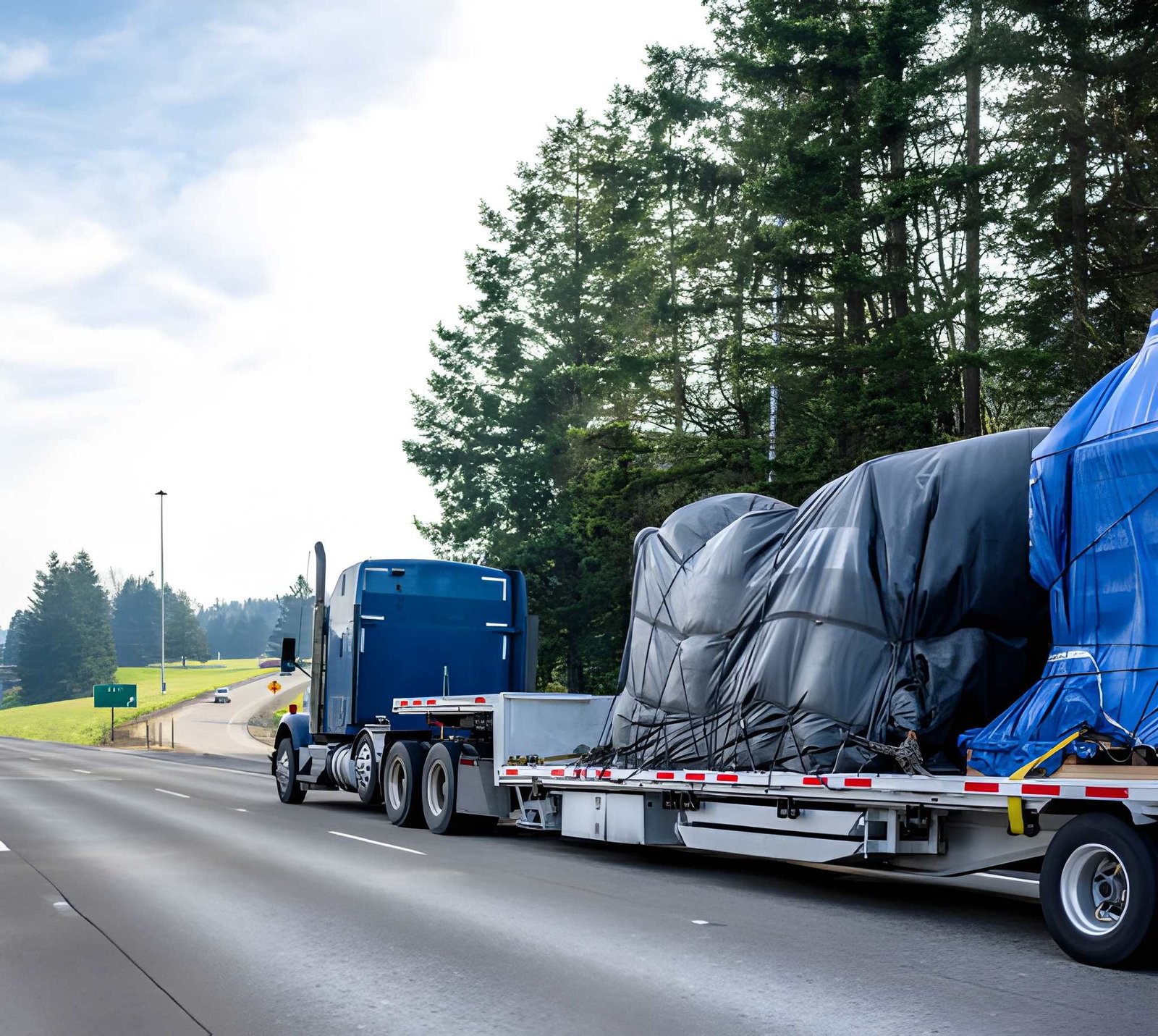
• Handling Over-Width and Over-Height Cargo: Flat Racks accommodate cargo that exceeds standard width (Over-Width OOG) and standard height (Over-Height OOG).
• Collapsible Flat Racks: Many modern flat racks feature flush-folding end walls. When empty, 4 to 5 folded flat racks can be interlocked together into a single ISO-standard 20ft or 40ft container block, dramatically reducing empty repositioning freight costs.
• Best Suited Cargo: Heavy construction equipment, wheel loaders, industrial transformers, boat hulls, structural steel fabrications, and heavy crated machinery exceeding 2.44m in width.
| Technical Parameter | Open Top Container (OT) | Flat Rack Container (FR) |
| Structural Design | Steel side walls, removable roof bows & tarpaulin | Reinforced floor bed, vertical end walls only, open sides |
| Over-Height Loading | Supported (Over-height OOG) | Supported (Over-height OOG) |
| Over-Width Loading | NO (Constrained by fixed side walls) | YES (Accommodates cargo wider than 2.44 m) |
| Loading Access | Top overhead crane & rear door | Top overhead crane & dual side forklift/crane |
| Weather Protection | Full waterproof tarpaulin & lashing cable | Cargo must be shrink-wrapped / crated / tarpaulined |
| Max Payload (40ft) | Up to 31,500 kg (69,445 lbs) | Up to 45,000 kg (99,200 lbs heavy duty) |
Lashing, Securing & Ocean Carrier Slot Loss Dynamics
When shipping OOG cargo on Flat Racks or Open Tops, maritime freight rates are heavily influenced by slot loss:
1. Lost Container Slots: If cargo on a 40ft Flat Rack extends significantly wider on both sides, it can obstruct adjacent container slots on the vessel. Depending on the carrier’s tariff, the shipper may be charged for the physical container plus a ‘lost slot’ or dead freight surcharge.
2. Top Stowage Restrictions: Over-height cargo prevents the carrier from stacking other containers on top, requiring top-tier vessel deck stowage.
3. Rigorous Lashing Certification: OOG cargo experiences severe dynamic forces at sea. Lashing must comply with IMO Cargo Securing guidelines and undergo inspection by marine surveyors before vessel loading, supported by professional ocean freight forwarding.
Decision Matrix: Which Equipment Should You Book?
• Choose Open Top if: Your cargo exceeds container height or requires overhead crane loading, but does NOT exceed standard ISO container width (2.34m internal). Open tops provide superior side protection against salt spray and impact.
• Choose Flat Rack if: Your cargo is over-width (wider than 2.40m), weighs over 32 tons, or requires side-forklift drive-on loading. It provides maximum structural payload strength and unrestricted perimeter access.
Frequently Asked Questions
Q: Can cargo on a Flat Rack get wet?
A: Yes. Flat racks have no roof or side walls. Cargo must be professionally shrink-wrapped, vacuum-sealed with desiccant bags, or tarped to prevent saltwater corrosion during ocean transit.
Q: What is the maximum height permitted on an Open Top container?
A: In-gauge cargo can reach ~2.35m (standard) or ~2.65m (high cube). Over-height cargo can exceed this, subject to vessel deck clearance and carrier approval.
Q: How does Navio Shipping handle OOG and project logistics?
A: Navio Shipping supports OOG (Out-of-Gauge) and project cargo movements with access to special equipment, including 20ft and 40ft Flat Racks and Open Top containers, sourced through our principals and liner agency network. With our established network across India, the Middle East, and Southeast Asia, we help customers identify suitable equipment and coordinate the movement of oversized and heavy cargo efficiently, subject to equipment and trade availability.
Commercial Call-to-Action
Navio Shipping can help evaluate Flat Rack vs Open Top Container requirements for project and oversized cargo.
Planning oversized cargo move? Connect with Navio Shipping for specialized 20ft and 40ft Flat Rack and Open Top equipment sourced through our principals and liner agency network, along with competitive ocean freight solutions.
Contact Navio Shipping for equipment availability and freight options (navio-shipping.com).
